Turkish Coffee: A Timeless Tradition in Every Cup
Learn how to make authentic Turkish coffee at home with a traditional cezve. Discover its rich history, UNESCO heritage, preparation and cultural traditions.
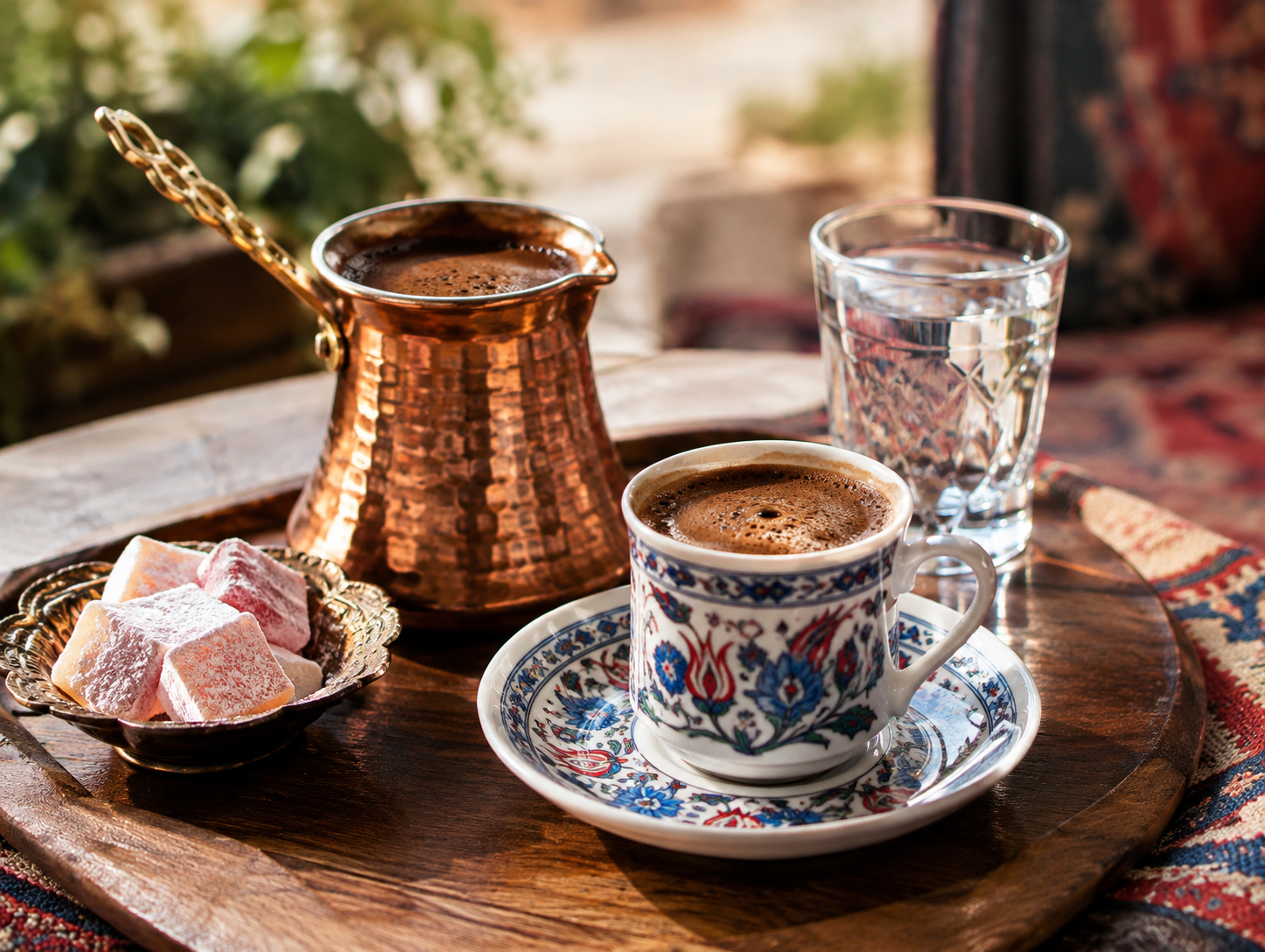
Finely ground coffee slowly brewed in a traditional cezve, served unfiltered in a small cup – a timeless Turkish coffee tradition.
More Than Just a Cup of Coffee
Turkish coffee is much more than a traditional beverage. It is a centuries-old part of Turkish culture, known for its rich flavor, distinctive foam, and unique preparation method.
Unlike filtered coffee or espresso, Turkish coffee is prepared with very finely ground coffee, water, and optionally sugar. The mixture is slowly brewed in a small pot called a cezve, creating a rich and aromatic coffee with a characteristic layer of foam.
But the real story of Turkish coffee goes far beyond its taste.
In 2013, Turkish coffee culture and tradition was inscribed on the UNESCO Representative List of the Intangible Cultural Heritage of Humanity, recognizing not only its preparation technique but also its importance in Turkish social and cultural life.
A Coffee with Centuries of History
Coffee became an important part of Ottoman social life during the 16th century. It gradually spread through Istanbul and became closely associated with coffeehouses, where people gathered to talk, exchange news, read books, and spend time together.
These coffeehouses became much more than places to drink coffee. They became important social spaces where people from different parts of society could meet and communicate.
Over the centuries, Turkish coffee developed its own distinctive preparation and serving traditions. The cezve, small fincan (coffee cup), saucer and accompanying glass of water became essential parts of the experience.
This is one reason Turkish coffee is considered a cultural tradition rather than simply a way of preparing coffee.
What Makes Turkish Coffee Different?
The secret is in the grind and the brewing method.
Turkish coffee uses an exceptionally fine coffee grind—much finer than the grind normally used for drip coffee. The coffee is mixed with water and sugar before brewing and heated slowly over low heat.
The goal is not to boil the coffee aggressively. Instead, it is heated until the coffee rises and develops its characteristic foam.
The coffee is then poured directly into a small cup, together with the fine grounds. The grounds gradually settle at the bottom as the coffee rests.
The result is a strong, aromatic and full-bodied coffee with a texture unlike most other coffee preparations.
How to Make Turkish Coffee at Home
You don’t need a special kitchen or complicated equipment to make Turkish coffee at home.
Ingredients
For 1 serving:
- 1 teaspoon finely ground Turkish coffee
- 1 small Turkish coffee cup of room-temperature water
- Sugar, according to taste
- Turkish delight, optional, for serving
Equipment
- 1 small cezve
- 1 Turkish coffee cup (fincan)
- Small spoon
Step 1 – Add the Coffee
Place 1 teaspoon of finely ground Turkish coffee into the cezve.
If you like your coffee sweet, add the sugar at this stage.
Traditional preferences include:
- Unsweetened: No sugar
- Lightly sweet: About 1 teaspoon of sugar
- Medium sweet: About 1½ teaspoons
- Sweet: About 2 teaspoons
Sugar preferences can vary, so adjust the amount to your taste.
Step 2 – Add the Water
Add one small Turkish coffee cup of room-temperature water to the cezve.
Stir the coffee, water and sugar together before placing the cezve on the heat.
Step 3 – Brew Slowly
Place the cezve over low heat.
Once it is on the heat, avoid stirring the coffee.
Allow it to heat slowly for approximately 3 minutes. As the coffee warms, a layer of foam will begin to form on the surface.
Step 4 – Protect the Foam
Just before the coffee reaches a full boil and rises to the top of the cezve, remove it from the heat.
For a traditional presentation, some of the foam can be carefully spooned into the coffee cup before returning the cezve briefly to the heat.
The important thing is not to let the coffee boil aggressively, as this can affect the flavor and foam.
Step 5 – Serve
Slowly pour the coffee into the Turkish coffee cup.
Allow it to rest for a short time so the grounds can settle.
Turkish coffee is traditionally served with a small glass of water, and it is often accompanied by Turkish delight or another small sweet.
Why Is Water Served with Turkish Coffee?
The glass of water is not simply decoration.
Traditionally, the water is enjoyed before the coffee to refresh the palate and prepare it for the rich aroma and flavor of the coffee.
This small detail is another example of how Turkish coffee is experienced as a ritual rather than simply a beverage.
Turkish Coffee and Hospitality
Offering coffee to a guest is an important expression of hospitality and friendship in Turkish culture.
Coffee is traditionally shared during visits, conversations, celebrations and family gatherings. It also has an important place in engagement and wedding traditions. UNESCO describes Turkish coffee as a symbol of hospitality, friendship, refinement and entertainment.
One of the best-known Turkish expressions says:
“A cup of coffee has forty years of memory.”
The idea behind the saying is that sharing a cup of coffee can create a lasting bond between people.
Turkish Coffee and Fortune Telling
There is another tradition that many people associate with Turkish coffee: coffee fortune telling.
Because Turkish coffee is served together with its grounds, the remaining grounds can form different shapes inside the cup.
After finishing the coffee, the cup may be turned upside down onto its saucer and allowed to cool. Friends may then interpret the shapes in the grounds as a form of entertainment and fortune telling.
Whether you believe in fortune telling or simply enjoy the tradition, it has become one of the most recognizable social customs associated with Turkish coffee.
Turkish Coffee Today
Although Turkish coffee has a long history, the tradition remains very much alive today.
It is enjoyed at home, in traditional coffeehouses, restaurants and cafés throughout Türkiye. It is also increasingly enjoyed around the world by people discovering Turkish cuisine and culture.
From a simple cup shared between friends to an important part of a wedding ceremony, Turkish coffee continues to connect people through conversation and hospitality.
And that is perhaps what makes Turkish coffee special.
It isn’t just about how the coffee is brewed. It is about how it brings people together.
A Small Cup with a Big Story
Turkish coffee may be served in one of the smallest cups in the world of coffee, but its cultural story is anything but small.
With its centuries-old preparation method, distinctive flavor and traditions surrounding hospitality, conversation and friendship, Turkish coffee offers a unique way to experience Turkish culture—one cup at a time.
Next time you make Turkish coffee, don’t just drink it. Take your time, share it with someone, and enjoy the tradition behind every cup.